

Catheter and Stoma Care
Provide hygienic, respectful catheter and stoma support.
$47
$145
Save 68%
View course

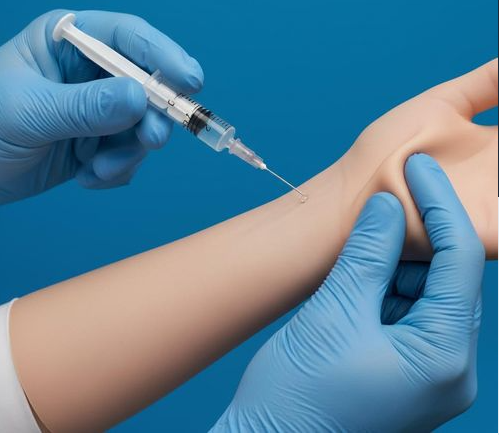
Build your understanding of subcutaneous injections and the checks, responsibilities and communication that support safer medication care.
A subcutaneous injection delivers medicine into the fatty tissue beneath the skin. This course introduces commonly used equipment, medication checks, approved injection sites, infection prevention and recognising adverse reactions.
Through short lessons and realistic workplace scenarios, you will explore how to follow individual medication support plans, protect the person’s comfort and dignity, and report concerns promptly.
This course provides foundational knowledge. It does not replace person-specific practical training, competency assessment or authorisation to administer injections.
Throughout the course, you will consider how the person’s prescribed medicine, device and individual plan determine the required approach. You will also learn why unclear or conflicting instructions must be resolved before proceeding.
Practical resources you can keep and use whenever needed.
Revisit medication checks, equipment considerations, site observations, adverse reactions and reporting reminders.
Reinforce your learning through practical, non-graded activities, reflection questions and workplace scenarios.
Check important preparation steps, including the current plan, medication instructions, consent, equipment and disposal arrangements.
Course outcomes
Explain what a subcutaneous injection is
Recognise common injection devices and the need for device-specific instructions
Identify the checks required before administering prescribed medication
Recognise discrepancies between medication labels, orders and support plans
Understand why approved sites and rotation instructions must be followed
Identify skin changes or equipment concerns that require advice
Support consent, privacy and communication before and during care
Explain infection prevention and immediate sharps disposal principles
Recognise possible adverse reactions and situations requiring emergency help
Document medication support and report errors or concerns factually
On the job
The medication label and current chart show different instructions.
Recognise the need to stop and obtain clarification before administration.
A replacement injection device is unfamiliar.
Understand why training on one device does not automatically establish competence with another.
The planned injection area appears bruised, swollen or damaged.
Identify the need to follow site instructions and seek advice when an appropriate option is unclear.
A person becomes anxious or declines the injection.
Use calm communication, respect their decision and follow the reporting pathway.
A suitable sharps container is unavailable.
Recognise that safe disposal arrangements must be ready before beginning.
New symptoms appear after medication is given.
Observe and report the changes, using the emergency pathway for severe symptoms.
You discover a medication error.
Prioritise the person’s safety, seek advice promptly and document the facts.
Six simple steps
Workbook activities are non-graded and provide opportunities to practise applying your understanding. Online learning checks assess knowledge. They do not establish practical competence to prepare doses or administer injections independently.
After successfully meeting the course requirements, learners will receive a Certificate of Completion for the Get My Course Subcutaneous Injections short course. You will also have the downloadable Course Pack for ongoing reference and learning.
Certificate of Completion
Awarded once you meet all course requirements.
This is non-accredited training. The Certificate of Completion is not a nationally recognised qualification or Statement of Attainment. It does not replace the person-specific training, assessed practical competence and workplace authorisation required to administer subcutaneous medication.
Prescribed injections can be an important part of a person’s ongoing care. Safe support requires accurate instructions, appropriate equipment, careful checks and attention to the person’s response.
Differences between medicines, devices and individual needs mean workers cannot rely on a single technique for every injection. Following the current plan and seeking clarification when something changes helps reduce avoidable errors.
Respectful communication also matters. Explaining what will happen, obtaining consent and responding to discomfort can help the person feel informed and involved in their care.
A subcutaneous injection delivers medication into the fatty tissue beneath the skin. The prescribed medicine and individual plan determine the equipment, site and administration requirements.
Examples include insulin and some anticoagulants. Not every medicine or formulation is suitable for this route, so the prescribed route must always be checked.
No. This is a non-accredited Professional Development Short Course. Successful learners receive a Certificate of Completion, not a nationally recognised Statement of Attainment.
The course is delivered online, with downloadable resources to support your learning.
You can start anytime. Enrol online and begin learning when it suits you.
No. You also need training specific to the person’s medication, equipment and support needs, assessed practical competence and appropriate authorisation.
Insulin is introduced as an example of a subcutaneous medicine. Supporting insulin administration also requires diabetes-specific training and adherence to the person’s diabetes management and medication plans.
Yes. The course introduces site considerations and the importance of following approved rotation instructions. Site selection must follow the medicine-specific guidance and individual plan.
No. The course does not authorise independent dosing decisions. Follow the current prescription and any authorised dosing protocol within your training and role, and seek advice if instructions are unclear.
Yes. The course introduces possible reactions, changes requiring clinical advice and severe symptoms requiring emergency assistance. It also covers reporting and documentation.
No. Workbook activities reinforce learning. Required course assessments will be identified separately.
Yes. Download the Reference Guide, Workbook and Workplace Checklist for future reference. Always use them alongside current medication instructions and workplace procedures.
Before this course I was nervous every time I had to assist with an injection. Now I understand exactly what I'm checking for, which site to use, and what to do if something doesn't look right. It's completely changed my confidence on shift.
The section on complications was what I needed most. I can now recognise the early signs of lipohypertrophy and infection and I know when to escalate. Our clinical supervisor has noticed the improvement in my documentation already,
We rolled this out across our whole support team before our NDIS audit. The auditor specifically asked about our medication administration practices and we could demonstrate documented worker training and a shared incident escalation process. Huge relief.
Strengthen your understanding of medication checks, individual plans and timely reporting to support more informed, respectful care.
Enrol now Chat with a Course Advisor
Have a question before you enrol? Send us your details and query below.
